
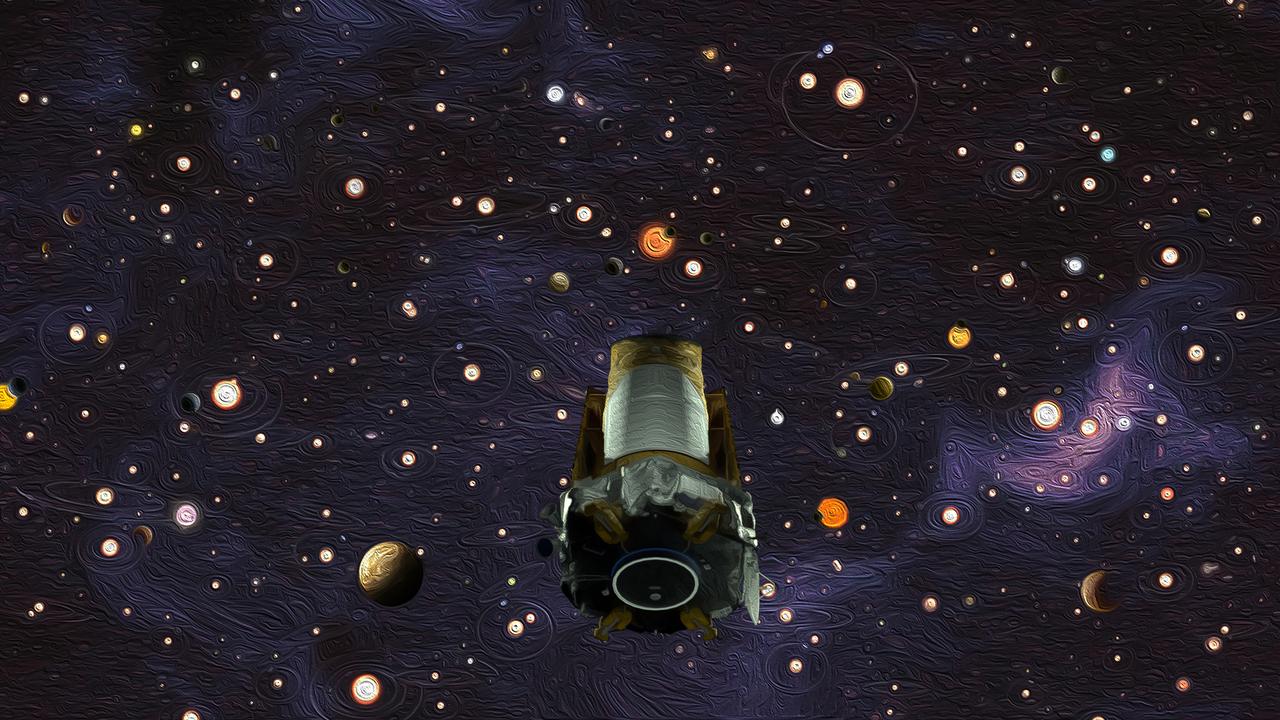
KSC-2012-3523, credit: NASA, via NASA Image and Video Library
This week in science, 20–26 October
The main science news this week, 20–26 October, was a 150-million-year-old fossil described as an early bird, a driving record for NASA's Perseverance rover, a claimed first exomoon, a clinical trial of a cavity-stopping liquid, and a serious PHP flaw that reports say was found with AI help. Most of these are early or single-study results, so each comes with a caveat.
Last week's edition is in our science news roundup for 13–19 October. Many items below come from short summaries of studies rather than full papers, so treat them as first reports.
What did NASA's Perseverance rover achieve this week?
NASA's Perseverance rover set an off-world driving record on 21 October, helped by its self-driving system.
Curiosity returned images of wind-carved cliffs on Mars that may hold evidence of ancient volcanic activity. The word is 'may': the cliffs are a lead for further study, not a settled finding.
An analysis of 2,884 exploding stars, reported on 22 October, suggests dark energy may change over time, which would challenge current understanding. It is one analysis and needs independent checks. A claimed first moon beyond the Solar System, at least as massive as Jupiter and orbiting a brown dwarf, was reported on 24 October. It has been described as evidence and potentially historic, but it is not confirmed. For how to weigh such claims, see our checklist for evaluating a claim.
| Date | Story | Strength of evidence |
|---|---|---|
| 21 Oct | Perseverance driving record | Reported achievement |
| 22 Oct | Dark energy may change, 2,884 stars | Single analysis |
| 22 Oct | Curiosity wind-carved cliffs | Possible volcanic clue |
| 24 Oct | Claimed first exomoon | Unconfirmed |
What is PHP2Shell, and do I need to update?
Reports say OpenAI's GPT-5.6 Sol model, working with Google's Wiz security agent, found two critical flaws in PHP, which were reported to have been present in every release since 2004. Emergency fixes were coordinated with Wiz, Cloudflare and US agencies including CISA, and reports say attack attempts are now in the millions. We could not confirm these details in OpenAI's own release.
Reports put PHP at 69.3% of websites whose server-side language is known. If you run a site, ask your host whether a patched version is installed. If you only visit sites, there is nothing for you to do.
Other AI news: Anthropic launched Claude Duet, a waitlisted preview for US Pro and Max subscribers that asks approval before sensitive actions such as payments. A US government clause on safeguarding data in large language model systems took effect on 19 October. If the terminology is new, our guide to what a large language model is helps. Nvidia unveiled the DSX Pod, a modular AI data centre it says can go live in 14 days, and Jensen Huang called humanoid robots the next great industry. Reports describe a £100 million UK AI Biosecurity Lab with OpenAI, Anthropic and Google DeepMind; the funding figures are not confirmed as official.

Life and health: what the week's medical studies show
A simple liquid painted onto teeth stopped cavities without drilling in a major clinical trial involving young children. A clinical trial is stronger evidence than most items this week, though one trial is not the last word. An analysis of more than 91,000 people linked missing blood pressure medication to losing much of its protection against heart attacks and strokes; consistent users had an 11% reduction in major events.
Some results are associations, which cannot show cause. Two drinks a day were associated with a 1 in 25 lifetime risk of alcohol-related death. Low-dose aspirin was linked to a 70% lower relative dementia risk in older adults with a specific genetic profile. The summary itself flags a catch, so read this as an association only.
Lab and mouse work stays early. Pancreatic cancer cells were found reshaping their DNA to escape treatment, and switching off a protein called Mitch made human cells burn more fat. Lab and mouse results do not always carry over to patients. Our piece on what scientific consensus means explains why single studies deserve caution.
| Finding | Type of evidence |
|---|---|
| Liquid on teeth stops cavities | Clinical trial, young children |
| Missed blood pressure pills | Analysis of 91,000+ people |
| Two drinks a day, 1 in 25 risk | Association |
| Aspirin and dementia, 70% lower | Association, specific genetic profile |
| Pancreatic cancer DNA reshaping | Lab work |
| Mitch protein and fat burning | Cells, earlier mouse work |
Earth, fossils and the past: volcanoes, a bird and a solar storm
The Kikai caldera in Japan is refilling with magma 7,300 years after a major eruption.
A 150-million-year-old fossil from China was described as an early bird with sharp teeth and a dinosaur-like claw. Scientists believe it is the earliest known example of flight, but we have not been able to confirm this independently.
A 178-year-old mystery concerns a train delayed by a solar storm; the incident is dated to 1848, not 1841. Tiny Southeast Asian snakes were also reported to roll up to four times faster than they slither.

Physics and chemistry: qubits, superconductors and the early universe
A quantum technique was reported to operate multiple silicon qubits at about 99.9% accuracy, which is described as a way past a scaling obstacle. We did not find this in a peer-reviewed paper in our checks.
A superconducting material studied for 40 years was found to have a hidden patchwork of crystal structures, revealed by 3D imaging. Helium formed in the first five minutes after the Big Bang was measured with unprecedented precision on 20 October, and a balloon-borne telescope revealed thread-like magnetic structures above the Sun.
What to look out for next
SpaceX's Falcon 9 Starlink 15-16 was scheduled for 26/27 October, carrying 27 satellites. Whether it launched was not confirmed when we checked. The next Starlink window, 15-18, opens 29/30 October.
Moonshot's Kimi K3.1 Pro has open weights due by 4 November, but they were not yet public. The week ahead brings the Fed decision on Wednesday, Microsoft and Alphabet results after the close, and Amazon results on Thursday. Anthropic is reported to be expected to file IPO paperwork publicly, which is not confirmed.
| Date | Launch or event | Notes |
|---|---|---|
| 26/27 Oct | Falcon 9 Starlink 15-16 | 27 satellites, launch unconfirmed |
| 29/30 Oct | Starlink 15-18 | Window opens |
| 4 Nov (NET) | Electron The Sea God Surveys | From New Zealand |
| 23 Nov (NET) | Ariane 6 Leo Europe 4 | No earlier than |
| Dec 2026 (NET) | Boeing Starliner-1 | Uncrewed cargo flight |
| 5 Jul 2028 (NET) | Dragonfly to Titan | No earlier than |

Try 20 UFO Sightings and What Really Happened
Searchlights over Los Angeles, Roswell’s balloon, radar ghosts, a lighthouse in a forest and the Navy’s Tic Tac: 20 true UFO stories and what investigators found.
Sources and further reading
Pages we opened when writing this article, last checked 26 October 2026. They open in a new tab, and we are not responsible for what other sites publish.
- ScienceDaily: Space & Time News — Perseverance, Curiosity, dark energy, helium and the 1848 solar storm item.
- ScienceDaily: Top Science News — Health studies, exomoon claim, bird fossil, Kikai caldera, qubits, superconductor and snakes.
- AI Weekly — PHP2Shell, attack attempts and the week-ahead market and IPO reports.
- Mind and Machine Weekly, 18 to 25 October — Claude Duet, PHP flaws, PHP share, Nvidia DSX Pod, UK biosecurity lab and Kimi K3.1 Pro.
- Spaceflight Now: Launch Schedule — Starlink, Electron, Ariane 6, Starliner-1 and Dragonfly dates.
This article was written with the help of AI. Before publication, automated checks confirmed that every listed source was opened and every picture is credited. Spotted a mistake? Write to [email protected].
More articles
This week in science, 13–19 October
Science news this week, 13–19 October 2026: the main space, AI, health, Earth and archaeology findings, explained with how strong the evidence is.

What Is a Large Language Model? A Plain Guide
The technology behind ChatGPT, Claude and Gemini, explained without jargon: how large language models are built, what they do well and where they go wrong.

How to Evaluate a Claim: A Practical Checklist
Carl Sagan's baloney detection kit, updated for a feed full of claims: nine questions to ask before you believe or share something.